
 Golf Pass
PGA Coach's Ultimate Guide to Ball Position: Calibrate Your Low Point
Discover how positioning the ball relative to your lead heel controls angle of attack, strike compression, and shot trajectory across every club in your bag.

Your swing arc possesses a naturally fixed low point roughly under your lead armpit. You don't need different swings for different clubs—you simply calibrate the ball relative to that low point.
Why Ball Position Dictates Low Point & Compression
In a sound golf swing, the club travels on an elliptical arc around your body. The lowest point of this arc—known as the swing low point—occurs approximately 2 inches forward of your sternum, directly under your lead shoulder joint.
"Amateurs move their bodies to try to hit different clubs. Pros keep their swing mechanics identical and simply let calibrated ball position control whether the club is ascending, level, or descending at impact."
If the ball is placed even two inches too far back for a fairway wood, the club arrives before reaching the bottom of its arc, leading to a steep smother. Conversely, an iron placed too far forward causes you to catch the turf before the ball or thin it across the green.
analyticsTrackMan Impact Angle of Attack (AoA) by Category
Struck past the low point on the upward upswing for high launch and low spin.
Struck before the low point. Ball-first contact followed by turf compression.
Sharp descending blow producing maximum friction, clean launch, and stopping spin.
Over 80% of amateur chunks (hitting fat) and thinned grounders trace directly to shifting the ball 2+ inches away from the proper position.
Modern instructors teach that the distance from your lead heel changes minimally; stance width is adjusted primarily by moving your trail foot.
PGA Tour players audit their ball position on the range before every tournament round. Optical drift is natural and must be calibrated regularly.
The 3 Foundational Ball Position Zones
Every club in your bag categorizes into one of three distinct stance zones relative to your feet and low point.

Driver & 3-Wood
WoodsPositioned directly off the inside edge of your lead heel. Wide athletic stance with upper spine tilted slightly away from target to encourage hitting upward (+AoA).
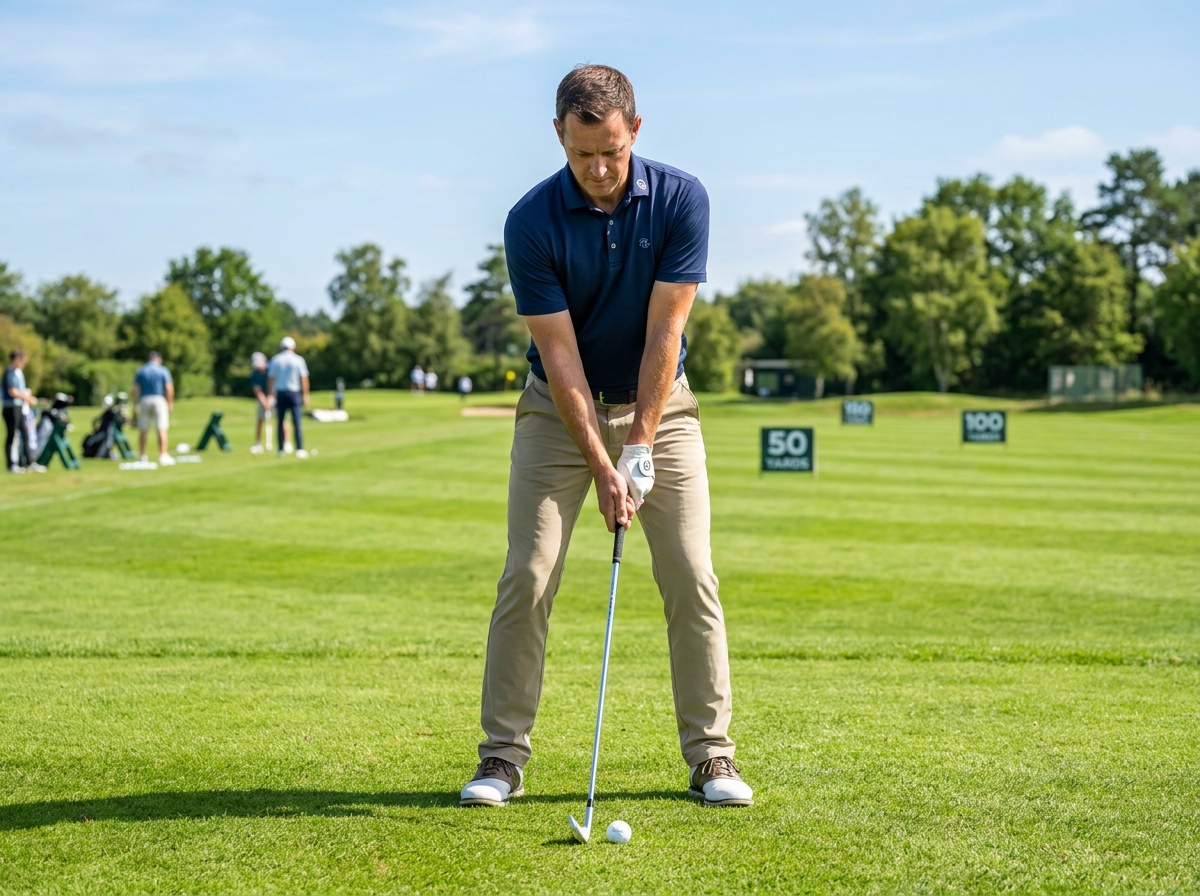
Middle Irons & Hybrids
IronsPositioned 1 to 2 ball widths forward of center (beneath the logo of your golf shirt). Shoulder-width stance with hands pressed slightly forward.
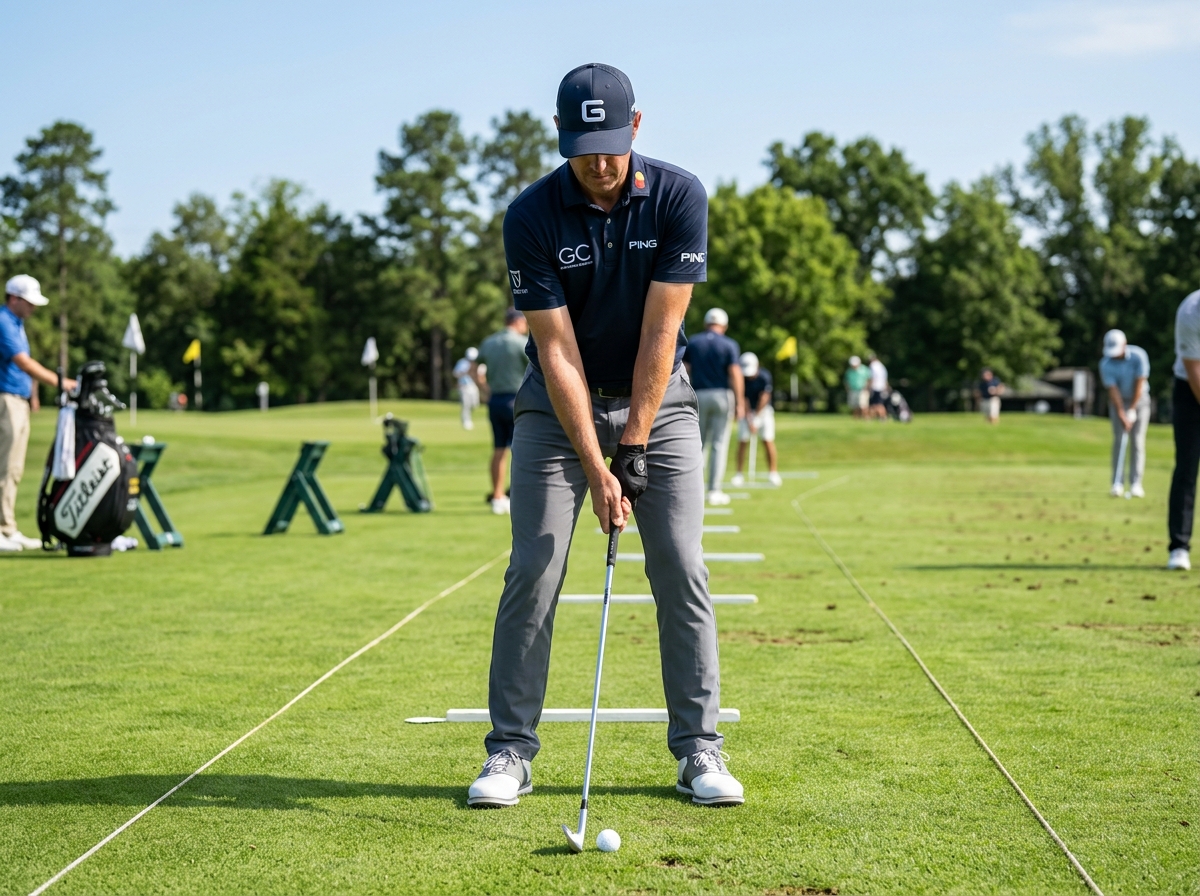
Short Irons & Wedges
WedgesPositioned dead center between both heels. Narrower stance width with 55% weight favored on the lead foot for pinpoint control and backspin.
Interactive Ball Position Calibrator
Select any club in your bag to see the exact stance width, heel offset, and launch monitor metrics.
Forward-most position in your bag. Allows the club head to pass its swing arc low-point and strike on the upswing for maximum distance and low spin.
Zero divot (Ball struck cleanly off tee)
Placing it too far back causes steep descending chops, sky marks, and severe ballooning slices.
"Tilt upper spine slightly away from target (~6-8°). Tee ball so half rests above crown. Sweep up at impact."
The Universal 3-Step Setup Routine
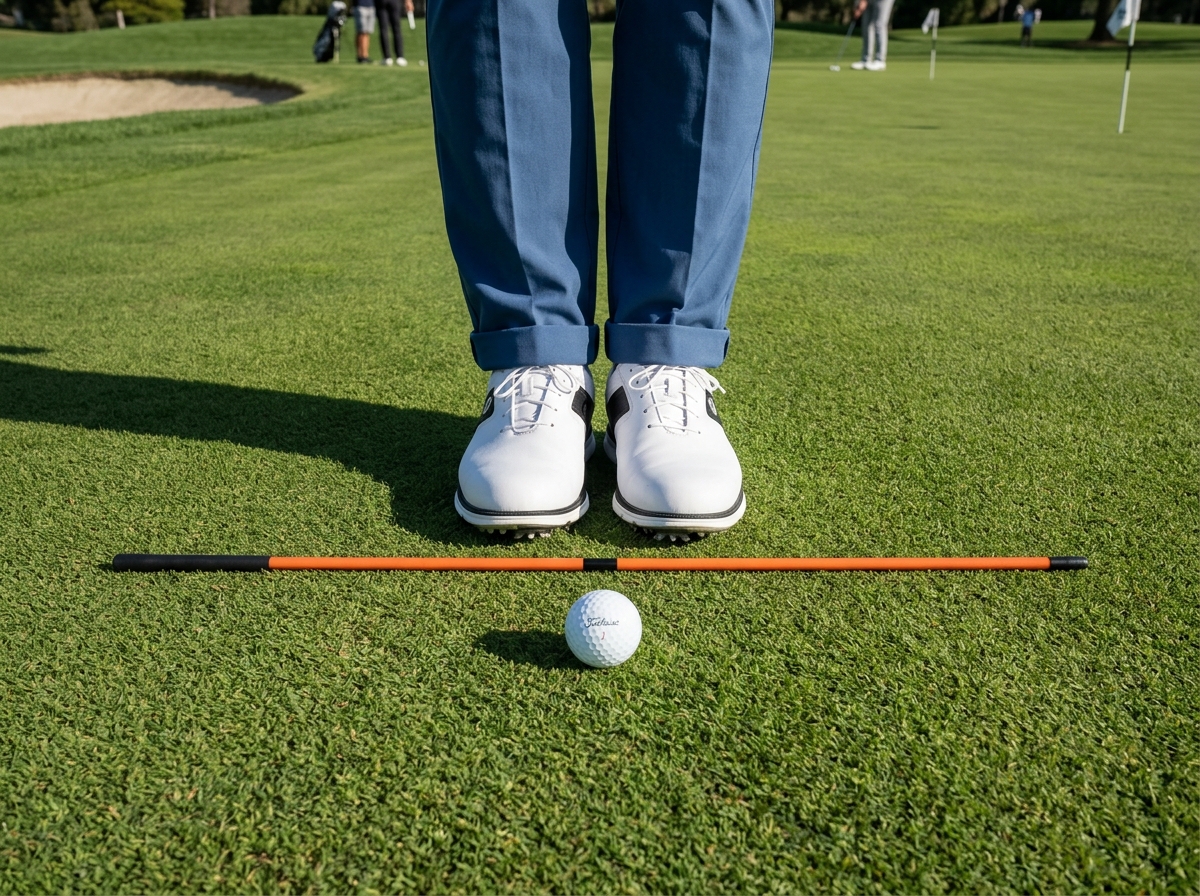
Feet Together Centered
Stand directly in front of the ball with feet touching side by side, centering the golf ball exactly in the seam between your shoes.
Set Your Lead Foot
Take a small, consistent 2–3 inch step left with your lead foot (for right-handers) and flare the toe open roughly 15 degrees towards the target.
Adjust With Trail Foot
Step your trail foot back to set your stance width: small step for wedges, medium for mid-irons, and a wide step for your driver.
Diagnose Your Ball Position Mistakes
Ball Too Far Forward
When the ball creeps too far towards your lead toe, your swing bottoms out prematurely before reaching the ball.
Ball Too Far Back
When golfers play the ball off their back foot, the club strikes at an excessively steep angle of attack with a closed face.
Continue Your PGA Journey
Explore all three foundational pillars of the golf swing setup.